Independent Research
Welcome to the global directory for independent research. This collection is an invitation to check things for yourself: leave prefabricated paths, read original documents instead of summaries about them, and compare how the same events look from different countries and in different languages. Below you will find direct links to official, primary collections — national archives on six continents, international organisations from the League of Nations to the United Nations, memory archives preserving the names and testimonies of the persecuted, and open digital libraries holding millions of books, newspapers and images. Everything is freely accessible online — and the closer you get to the sources, the clearer history and the present become.
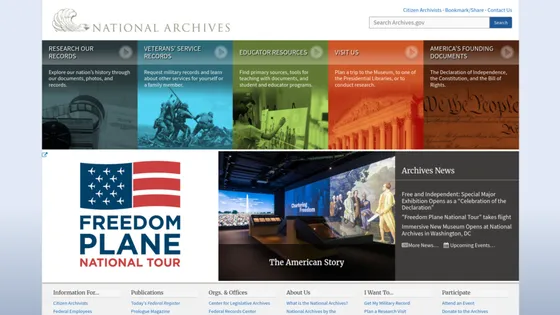
The National Archives and Records Administration (NARA) is the official keeper of the United States government's most historically significant documents. Founded in 1934, it safeguards over 13 billion pages of text records, 10 million maps and charts, and millions of photographs and audiovisual materials. At NARA, you can access the original Declaration of Independence, the Constitution, and the Bill of Rights. The archive operates numerous presidential libraries, regional facilities, and a fully searchable online catalog. Its digitization efforts have made millions of federal records accessible to anyone with an internet connection — from census data and military service records to congressional legislation and diplomatic cables. For independent researchers, NARA is the single most comprehensive gateway to understanding the documented history of the United States and the structural decisions that shaped modern governance.

Established in 1800, the Library of Congress is the largest library in the world, holding over 170 million items across virtually every format and every subject known to humanity. It serves as the research arm of the U.S. Congress and is simultaneously open to the public. Its digital collections include millions of historical photographs, rare books, manuscripts, maps, audio recordings, and motion pictures. The American Memory project alone offers free access to tens of thousands of primary source materials documenting American history from the colonial era to the twentieth century. The LOC is also the home of the U.S. Copyright Office and provides extensive resources for genealogical research, international law, and global cultural studies. For those who want to read history from original sources rather than editorial summaries, this is an essential starting point.

The Dwight D. Eisenhower Presidential Library, Museum, and Boyhood Home is administered by the National Archives and Records Administration and is located in Abilene, Kansas. It preserves the official papers and historical records of the 34th President of the United States, covering his tenure from 1953 to 1961 — a period that included the Korean War armistice, the launch of NASA, the construction of the Interstate Highway System, and the earliest Cold War tensions. The collection includes classified documents now declassified, internal White House memos, correspondence with world leaders, and audiovisual materials. Researchers studying Cold War strategy, military-industrial policy, and mid-century American governance will find this library indispensable. The online digital archive provides searchable access to thousands of documents from Eisenhower's military and presidential careers.

The Ronald Reagan Presidential Library and Museum, located in Simi Valley, California, is one of the most visited presidential libraries in the United States. It houses over 60 million pages of government records, 1.6 million photographs, and an extensive audiovisual collection documenting Reagan's two terms as President from 1981 to 1989. This period covered the end of the Cold War, the Iran-Contra affair, the Strategic Defense Initiative, and major domestic economic policy shifts known as "Reaganomics." The library provides public access to declassified documents, presidential speeches, NSC meeting records, and correspondence with international leaders. The permanent museum exhibits include a full-scale Air Force One aircraft. For those studying the ideological and political foundations of modern conservative governance and the geopolitics of the late Cold War, this is an essential primary source.
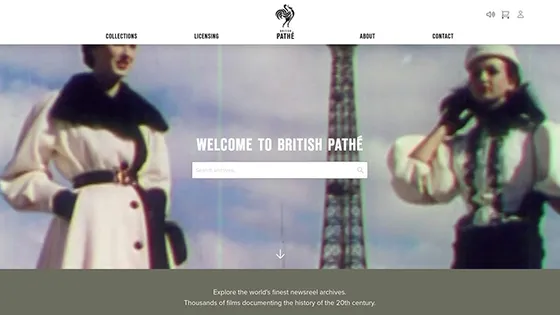
British Pathé is one of the oldest and most historically significant audiovisual archives in the world, holding over 100 years of news footage, documentaries, and cultural film spanning from 1896 to 1976. Originally a newsreel company, Pathé filmed major world events as they happened — wars, royal coronations, political summits, sporting events, and social movements. Their entire collection of over 90,000 film clips has been digitized and is freely accessible on their website and YouTube channel. For independent researchers, British Pathé represents a priceless visual record of the 20th century that cannot be found anywhere else. The archive is especially valuable for studying the two World Wars, the British Empire, post-war reconstruction, and the social upheavals of the 1960s and 70s through genuine contemporary footage rather than reconstructed drama.
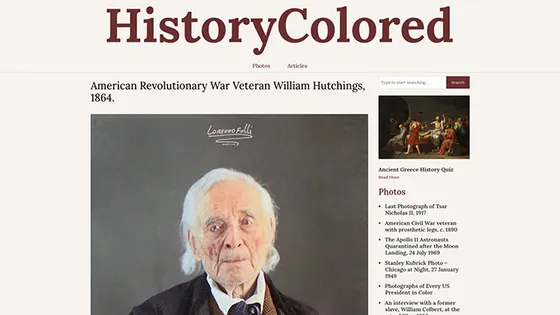
History Colored is a specialized platform dedicated to the artistic colorization and digital restoration of historical black-and-white photography and film footage. By applying advanced neural network AI and meticulous manual color work, the team transforms century-old images into vivid, lifelike photographs that bring historical figures and events dramatically closer to modern viewers. The platform covers everything from Civil War portraits and World War I trench photographs to Depression-era street scenes and early Hollywood stills. Beyond entertainment, colorization serves a genuine historical function: it removes the psychological distance created by monochrome imagery and forces viewers to see historical subjects as real people living in a real world. Their YouTube channel provides some of the most emotionally engaging historical content available online, making it an excellent complement to traditional archive research.

The Ronald Reagan Presidential Foundation and Institute is the sole nonprofit organization created by President Reagan himself, charged with advancing his personal legacy and the principles he championed throughout his public life: individual liberty, economic opportunity, global freedom and democracy, peace through strength, and national pride. Unlike the government-run presidential library, this independent foundation operates the Reagan Ranch in Santa Barbara and manages the Reagan Presidential Library's museum program. It produces educational content, policy conferences, leadership programs for young Americans, and a steady stream of documentary and archival video material. For researchers interested in understanding the philosophical underpinnings of Reagan-era conservatism from a primary institutional source — rather than through academic or journalistic interpretation — this foundation provides unmediated access to original speeches, writings, and retrospective commentary.

LionHeart FilmWorks is a veteran-led independent production studio specializing in bringing military history to life through cinematic storytelling. Founded and staffed by former military personnel, the company brings an authentic, insider perspective to the dramatization and documentation of combat history, veterans' experiences, and the operational realities of warfare across multiple eras. Their productions are notable for their commitment to historical accuracy, consulting directly with combat veterans and military historians rather than relying solely on secondary accounts. For independent researchers interested in military history who want to engage with materials produced by those who actually served, LionHeart offers a distinctive viewpoint that bridges the gap between lived experience and historical narrative. Their YouTube channel features interviews, documentary segments, and historical deep-dives that are rarely accessible through mainstream media channels.

The Associated Press, one of the world's oldest news agencies, has opened its film vault to everyone: the AP Archive channel on YouTube holds hundreds of thousands of digitized news clips reaching back more than a century — wars and peace treaties, revolutions, moon landings and everyday street scenes from every continent, much of it raw and unedited. It is world history as the cameras actually recorded it, before commentary was added. The archive's own site serves professional licensing, while the channel makes the footage itself freely viewable for research and education.
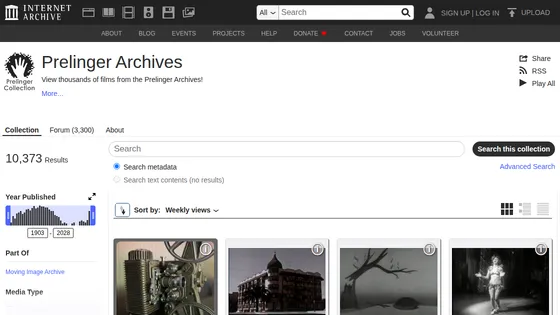
The Prelinger Archives, collected by Rick Prelinger and hosted by the Internet Archive, preserve more than ten thousand "ephemeral" films — advertising, educational, industrial and amateur movies of the 20th century, chiefly American. These are the films that were never meant to last: classroom hygiene reels, factory tours, road-trip home movies, civil-defence instructions. Precisely for that reason they show everyday life, hopes and anxieties more honestly than any polished newsreel. The films are free to watch, and a large share is free to download and reuse.
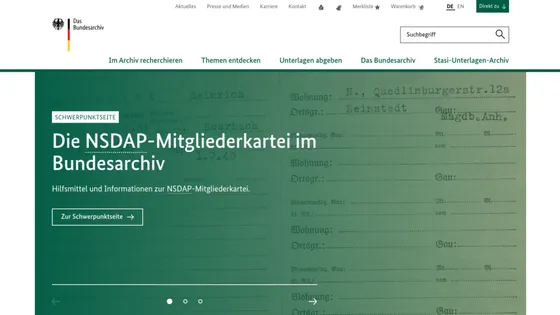
The Bundesarchiv (Federal Archive of Germany) is the central federal institution for preserving and making accessible the historical records of the German state from the Imperial era through the Weimar Republic, the Third Reich, the post-war division, and reunified Germany. Located primarily in Koblenz with branches across the country, the Bundesarchiv holds over 330 linear kilometers of archival material, including classified military records, Nazi party files, Stasi surveillance documents from East Germany, and the records of modern federal government ministries. Its Film Archive contains one of Europe's largest collections of historical moving images. For anyone researching 20th-century European history, the political structures of fascism and communism, or the mechanics of state surveillance, the Bundesarchiv provides direct, unmediated access to primary documents of extraordinary historical weight.
The National Archives of the United Kingdom is the official guardian of England's government records and one of the largest archives in the world, holding over 11 million historical records spanning a thousand years of British history. Located at Kew, Richmond, it preserves everything from the Domesday Book of 1086 to classified Cabinet papers from the 20th century, including MI5 and MI6 intelligence files released under the 30-year rule. The Discovery catalog provides online access to descriptions of over 32 million records, with millions of documents now fully digitized. The archive is particularly valuable for researchers studying British colonial history, the two World Wars, post-war British policy, and the mechanics of Parliamentary democracy. Through its educational outreach, the National Archives also provides extensive teaching resources for schools and universities.

The Archives Nationales of France is one of the oldest and most important national archive systems in the world, created during the French Revolution in 1790 to centralize and protect the documentary heritage of the French state. Its collections span over 380 kilometers of shelving and cover more than thirteen centuries of recorded history — from Merovingian royal charters and medieval papal correspondence to the administrative records of the French Empire, the Third Republic, and modern government ministries. The archives hold the original Treaty of Westphalia, Napoleon's personal correspondence, and the trial records of Joan of Arc. A major portion of the collection is now accessible online through their digital portals, including the genealogy-focused Salle des inventaires virtuelle. For researchers of European political history, diplomacy, and French cultural heritage, this is an irreplaceable primary source institution.

The National Library of Ireland is the official keeper of Ireland's documentary heritage and one of the great cultural institutions of the Anglophone world. Founded in 1877, its collections include over 12 million items: rare manuscripts, vintage maps, historical photographs, newspaper archives dating back centuries, and the personal papers of major Irish literary figures including W.B. Yeats. The library holds the most complete collection of Irish historical newspapers in existence, as well as extensive genealogical records vital for the global Irish diaspora tracing their ancestry. Its digitization program has made hundreds of thousands of items freely accessible online, including the Lawrence Collection — a remarkable photographic survey of late Victorian and Edwardian Ireland. For researchers of Irish culture, literature, politics, and history, as well as those with Irish family roots, the NLI is the foundational research institution.
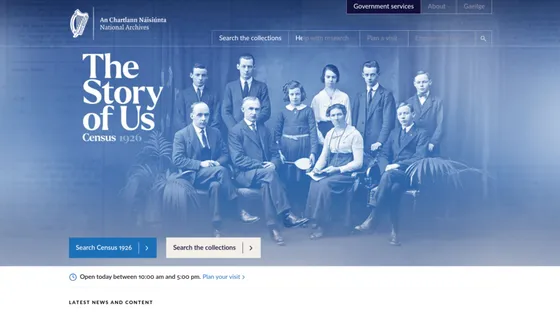
The National Archives of Ireland holds the official state records, legal charters, military logs, and genealogical census data of the Irish nation. Established in 1988 through the merger of the Public Record Office of Ireland and the State Paper Office, it preserves the administrative, judicial, and legislative documentation of the Irish government from the medieval period to the present day. Among its most significant collections are the 1901 and 1911 census records — now fully digitized and freely searchable online — making it one of the most widely used genealogical resources in the world. The archive also holds records relating to Irish land ownership, court proceedings, and the Irish revolutionary period of 1916–1923, including materials relating to the IRA, the War of Independence, and the Civil War. It is essential reading for anyone researching Irish political history or family ancestry.

Landsbókasafn Íslands — the National and University Library of Iceland — is the central memory institution of the Icelandic nation, serving simultaneously as the national deposit library and the main research library for the University of Iceland. Founded in 1818, it holds over one million printed works, extensive manuscript collections including the Eddas and Sagas in original medieval handwriting, historical maps, newspapers dating to the 18th century, and a large digital archive accessible online. Its Timarit.is portal provides free access to over 5.5 million pages of digitized Icelandic-language newspapers and periodicals spanning three centuries. For researchers of Norse literature, Old Icelandic language, Viking Age history, or the distinctive civic and cultural development of the world's oldest surviving parliament, this library is an unparalleled resource. Iceland's small population belies the extraordinary richness and depth of its preserved documentary heritage.

Þjóðskjalasafn Íslands — the National Archives of Iceland — safeguards the official administrative documents, legal files, and institutional records of the Icelandic state from the 12th century to the present day. As the country's principal public records keeper, it holds the foundational documents of Icelandic sovereignty: legislation, court records, government correspondence, and the administrative files of the Althing, the world's oldest continuously operating parliament established in 930 AD. The archive also preserves church records, land registries, and genealogical materials that allow Icelanders to trace their ancestry back many generations with unusual precision. For researchers of Nordic governance, parliamentary democracy, small-state administration, and northern European legal history, the Þjóðskjalasafn offers a unique window into a society that maintained sophisticated civic institutions through centuries of isolation.

GARF — the State Archive of the Russian Federation — is Russia's largest and most comprehensive state archive, holding the records of the central government institutions of both Imperial Russia and the Soviet Union. Under the umbrella of Rosarkhiv (the Federal Archival Agency), it preserves hundreds of millions of documents: imperial decrees, revolutionary-era Bolshevik records, Stalin-era NKVD files, Politburo meeting transcripts, and the administrative records of every Soviet government ministry. Some of the most historically significant documents in the world reside here — including records relating to the Gulag system, the Molotov-Ribbentrop Pact, World War II military planning, and the internal communications of the Soviet Communist Party. While full access remains restricted for many holdings, a growing number of collections have been declassified and are accessible via GARF's online catalog and the Rosarkhiv digital portal.
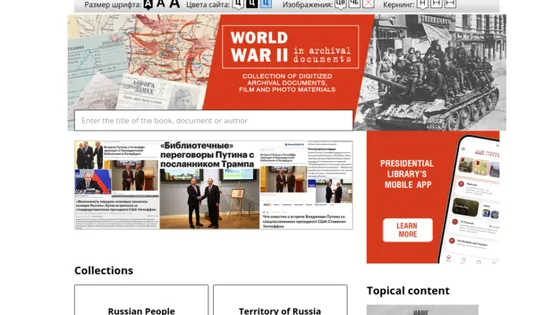
The Presidential Library of Russia, established by presidential decree in 2009 and bearing the name of Boris Yeltsin, is a national digital library dedicated to preserving and publicly disseminating historical documents, audio-visual materials, and collections relating to Russian state history, law, and culture. Unlike a traditional physical archive, the Presidential Library operates primarily as a digital platform, providing free online access to millions of scanned primary source documents including imperial-era publications, Soviet-period newsreels, political speeches, and rare photographic collections. It holds unique materials relating to the fall of the Soviet Union and the turbulent founding years of the Russian Federation. Its RuTube channel and online portal make it one of the most accessible Russian historical resources for international researchers. For those studying Russian political history, constitutional development, and the post-Soviet transition, this is a key primary source institution.
The RGADA — Russian State Archive of Ancient Acts — is one of the oldest and most specialized archival institutions in Russia, holding documents that predate the establishment of modern Russian state institutions by centuries. Its collections focus on medieval Russian manuscripts, early Muscovite state records, imperial charters from the 15th century onward, and the administrative documents of the pre-Petrine Russian state. Among its holdings are priceless medieval parchment documents, original land grant charters, early church records, and the papers of major Russian aristocratic families. For scholars of medieval history, Old Church Slavonic manuscripts, the development of the Russian Orthodox Church, or the political structures of pre-modern Muscovy and the Tsardom of Russia, RGADA is an irreplaceable primary source repository that is rarely accessible through mainstream international research channels.

The RGASPI — Russian State Archive of Socio-Political History — is the primary repository for the internal records of the Soviet Communist Party (CPSU) and related socialist and communist organizations. Its collections include Politburo meeting protocols, internal party correspondence, Stalin's personal archive, Lenin's manuscripts, Comintern (Communist International) records, and the internal files of Soviet mass organizations including the Komsomol and the trade union movement. For researchers of 20th-century communist ideology, Soviet political history, the mechanisms of totalitarian governance, the Comintern's international operations, and the internal power struggles of the Soviet leadership, RGASPI provides direct access to the working documents of history's largest communist state. While many sensitive collections remain classified, significant portions have been opened to researchers since the early 1990s.
Digitalarkivet — the Digital Archive of the National Archives of Norway (Arkivverket) — is one of Europe's largest free portals for digitized historical sources, holding more than 73 million scanned pages. It offers parish registers reaching back to the 17th century, complete national censuses, emigration protocols documenting the great Norwegian migration to America, probate records, land registers and court protocols. Everything can be browsed free of charge, and a large share is transcribed and machine-searchable, so a single name can be followed across centuries of records. For genealogists and historians of Scandinavia, Digitalarkivet sets the standard for what open access to a nation's written memory can look like.
The Riksarkivet — the National Archives of Sweden — preserves the records of Swedish government and society from the Middle Ages to the present day. Its online search service, the Digitala forskarsalen (Digital Research Room), has been free of charge since 2018 and opens millions of digitized images: church books recording births, marriages and deaths, tax and household examination ledgers, military rolls, court records and historical maps. Sweden's parish registers, kept continuously since the 17th century, are among the most complete population records in the world, making the archive indispensable for demographic research and family history far beyond Sweden's borders.

The Rigsarkivet — the Danish National Archives — calls itself "Denmark's memory" and preserves the records of the Danish state from the medieval kingdom to the modern welfare state. Its online service Arkivalieronline provides free access to digitized church books, national censuses reaching back to 1787, military levying rolls, probate and property records, and sources on Denmark's former colonies and duchies. Because Danish administration long covered Norway, Schleswig-Holstein, Iceland and territories in the Caribbean, its holdings matter to the history of many nations. The digitized collections can be browsed without registration.

The Kansallisarkisto — the National Archives of Finland — documents a country whose written record passes through the Swedish realm, the autonomous Grand Duchy under the Russian Empire, and the independent republic. Its online service Astia provides free access to more than four million digitized items, from centuries-old court records (tuomiokirjat) to administrative files, maps and collections on the wars of the 20th century. Finland runs one of the most ambitious mass-digitization programmes in Europe, with the declared aim of moving its archival heritage systematically online, so the accessible share grows year by year.

The Nationaal Archief in The Hague holds the records of the Dutch state, its provinces and its former overseas possessions — including the archives of the Dutch East India Company (VOC), inscribed in UNESCO's Memory of the World register as the paper trail of the world's first multinational corporation. Millions of scans, indexes and royalty-free photographs can be searched and viewed online free of charge. Its companion service Delpher, run by the Dutch national library KB, adds well over one hundred million digitized pages of Dutch newspapers, books and magazines from 1618 onwards — together a remarkably open window into four centuries of global trade, seafaring and everyday life.
Gallica is the digital library of the Bibliothèque nationale de France and its partner institutions, founded in 1997 and today one of the largest free digital libraries in the world. It offers open access to several million digitized documents of every era and medium: books, newspapers and journals, manuscripts, maps, prints, photographs, musical scores and sound recordings. Medieval illuminated manuscripts, Enlightenment correspondence, revolutionary pamphlets and the great French press of the 19th century stand side by side, most of it downloadable in high resolution. For anyone reading French — or learning to — Gallica is an inexhaustible primary-source archive of European intellectual history.
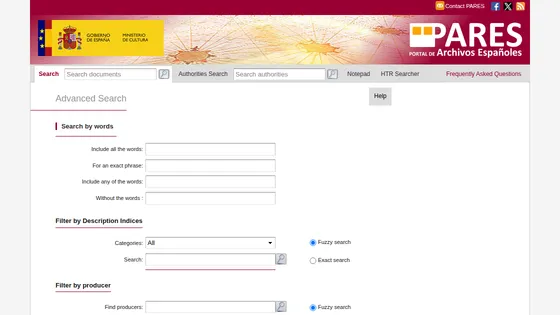
PARES — the Portal de Archivos Españoles of the Spanish Ministry of Culture — is the joint online gateway to the Spanish state archives, among them the Archivo General de Simancas, the Archivo Histórico Nacional and the Archivo General de Indias in Seville, whose colonial records are inscribed in UNESCO's Memory of the World register. Free of charge, it serves digitized documents spanning half a millennium: royal decrees, Inquisition files, ships' registers and the correspondence that bound Madrid and Seville to the Americas and the Philippines. For the history of Latin America especially, PARES is a primary source of the first order — readable from anywhere.
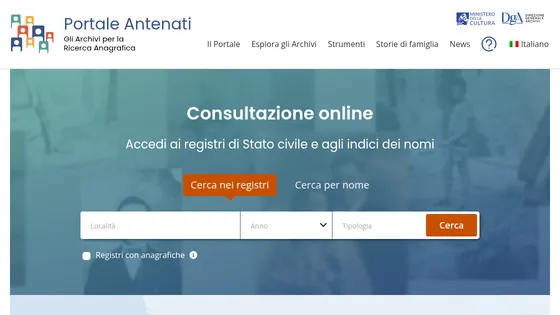
The Portale Antenati — the "Ancestors Portal" of the Italian State Archives — provides free access to digitized civil status registers from state archives across Italy: birth, marriage and death records, many reaching back to the Napoleonic civil registration of the early 19th century. Tens of millions of register images are already online and the collection grows continuously, accompanied by name indexes built with the help of volunteers. For the descendants of the great Italian diaspora on every continent, the portal is often the first door back to a concrete village, street and family — and for historians it maps Italian society household by household.

"Szukaj w Archiwach" ("Search the Archives") is the central online portal of the Polish state archives, providing free access to more than 85 million scans from over 120 institutions: civil and church registers, municipal and court records, maps, photographs and documents of daily administration. Poland's archives survived a century in which the country's borders were redrawn repeatedly and much of its heritage was deliberately destroyed — what remains documents the partition era, the Second Republic, the German occupation and the People's Republic. The portal makes this scattered, hard-won record searchable in one place, without registration.
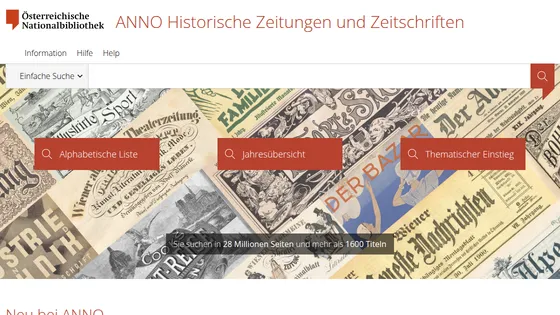
ANNO — AustriaN Newspapers Online — is the digital newspaper reading room of the Austrian National Library, offering free access to millions of pages of historical newspapers and magazines, the earliest from 1568, the bulk from the 18th to the mid-20th century. The dense press landscape of the Habsburg monarchy appears here in the many languages of the empire, alongside the papers of the First Republic, the Anschluss years and the Second Republic. Large parts are full-text searchable, which turns the collection into a day-by-day chronicle of Central European politics, science and everyday life as contemporaries actually read it.

DigiVatLib is the digitization service of the Vatican Apostolic Library — not to be confused with the Vatican Apostolic Archive, which remains closed to general online access. The library's treasures, however, are online: more than 20,000 fully digitized manuscripts, with the long-term goal of digitizing all of its roughly 80,000, plus incunabula and other holdings, all free of charge in high resolution. Among them are some of the oldest surviving biblical codices, ancient Greek and Latin texts, and illuminated masterpieces of the Middle Ages and Renaissance. It is one of the most important bodies of pre-modern written heritage ever opened to everyone.

The Magyar Elektronikus Könyvtár — the Hungarian Electronic Library, maintained by the National Széchényi Library — is one of the oldest digital libraries in Europe, begun in 1994 as a volunteer initiative and grown into a collection of nearly thirty thousand free digital documents: Hungarian literature and poetry, scholarship, history, reference works and translations. Its sister services extend the reach — the Electronic Periodicals Archive (EPA) for digitized journals and the Digital Archive of Pictures (DKA). Everything is freely readable and downloadable without registration. For the written heritage of Hungary and its diaspora, and for a millennium of Central European history told in Hungarian, this is the first address.

The National Library of Belarus in Minsk — housed in its famous diamond-shaped building — maintains a broad digital offering with an English interface: an electronic library of digitized books and documents, a data bank of Belarus' historical and cultural heritage, the collection "Book of Belarus of the 14th–18th centuries" with the country's early printed treasures, open-access resources and a virtual reading room. As the central library of the country it preserves the written record of Belarusian history, from the printing tradition of Francysk Skaryna to the present day — and makes a substantial part of it readable from anywhere.

The Arquivo Nacional da Torre do Tombo in Lisbon is one of the oldest active archives in the world — its records reach back to the ninth century, and it has been the memory of Portugal since the Middle Ages. Through DigitArq, the portal of the Portuguese archives, more than eight million archival descriptions linked to over sixty million digitized images are searchable free of charge: royal chanceries, the files of the Inquisition, parish registers, and the documents of the Age of Discoveries that connected Lisbon with Africa, Brazil, India and Japan. For the history of the Portuguese-speaking world on four continents, this is the primary address.

e-rara is the joint platform of Swiss libraries for digitized rare prints: over 145,000 titles from the 15th to the 20th century, from incunabula and Reformation pamphlets printed in Basel and Geneva to scientific classics and illustrated travel accounts — free, in high resolution, with full downloads. Its companion e-newspaperarchives.ch, run by the Swiss National Library together with the cantonal libraries, adds millions of digitized Swiss newspaper pages in German, French and Italian. Together they open the printed record of a multilingual country that has long stood at the crossroads of European intellectual life.

ekultūra — "Lithuanian cultural heritage in one place" — is the new joint portal of Lithuania's museums, libraries and archives, successor to the long-serving ePaveldas platform. It gathers artworks, digitized books and periodicals, church registers, manuscripts, maps, films and music into one free search. The collection preserves the record of a nation whose statehood was twice erased from the map — including prints from the era of the 19th-century Tsarist press ban, when Lithuanian books survived only because the knygnešiai, the book smugglers, carried them across the border. An English interface makes it approachable for readers worldwide.
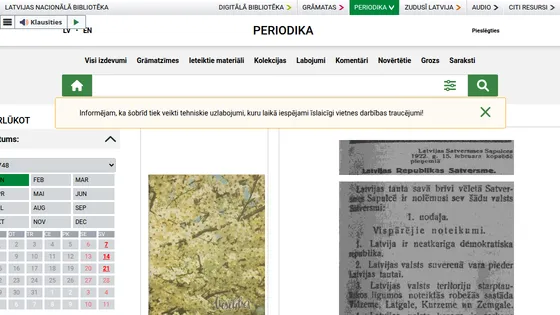
Periodika.lv, the newspaper portal of the National Library of Latvia's digital library, offers free access to digitized Latvian newspapers and magazines — from early titles of the 18th and 19th centuries through the founding of the republic, the occupations, and the restoration of independence. Full-text search makes a small nation's entire press history explorable, including the exile newspapers of Latvians scattered across the world after 1944. The portal is part of the wider National Digital Library, which adds digitized books, maps, photographs and audio recordings of Latvia's cultural memory.

DIGAR is the digital archive of the National Library of Estonia: digitized books, newspapers from 1821 onward, maps, sheet music, photographs and posters, freely accessible with an English interface. Its newspaper portal makes the Estonian press full-text searchable across two centuries — through the national awakening, the first independence, the Soviet and German occupations, and the restoration of the state in 1991. For a language of just over a million speakers, Estonia's digitized record is remarkably complete: a small language given a large, permanent address.
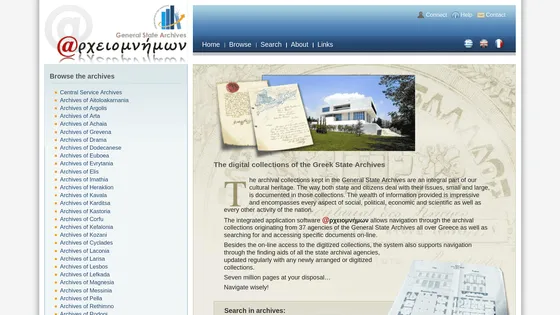
Arxeiomnimon (Αρχειομνήμων) is the digital repository of the General State Archives of Greece: seven million digitized pages from 37 archival agencies across the country, navigable in Greek, English and French — with the system's own greeting on its front page: "Navigate wisely!" The collections document Greek life from the era of the 1821 revolution through the modern state: administrative and court records, notarial archives, school registers, maps and photographs from Corfu to the Dodecanese. For the modern history of Greece and the wider eastern Mediterranean it is the central open source.
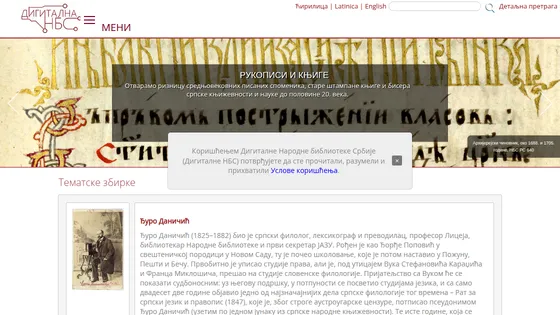
The Digital National Library of Serbia opens the treasury of the country's central library in Cyrillic and Latin script alike: medieval manuscripts and church books, old printed books, the personal papers of Serbian writers and scholars, historical newspapers, photographs, maps and sound recordings, arranged in curated thematic collections. The interface is trilingual — Serbian Cyrillic, Latin and English — and everything is freely readable. For the written heritage of the Balkans, where Byzantine, Ottoman and Central European currents met and mixed, it is a rich and still underused source.

BNE Digital, the digital heritage platform of the Biblioteca Nacional de España, opens the collections of Spain's national library: hundreds of thousands of digitized works of every era and kind — medieval manuscripts, Golden-Age first editions, the drawings of Goya, maps, photographs and sound recordings — alongside the Hemeroteca Digital of historical Spanish newspapers. Everything is freely searchable, with curated collections from children's books to authors newly in the public domain. Together with the archives portal PARES it completes Spain's opened memory: the library side of a heritage that shaped the map of half the world.
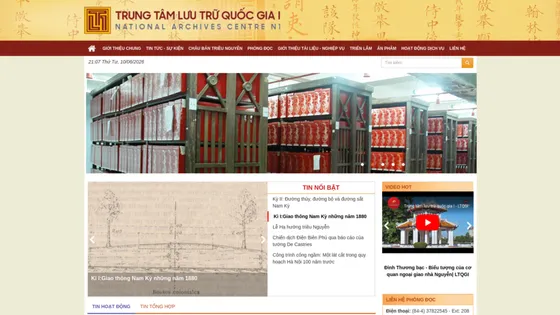
The National Archives of Vietnam is the central state institution responsible for preserving the documentary heritage of the Vietnamese nation across its full historical depth — from the records of the Nguyễn Dynasty's imperial court at Huế to the administrative archives of the Democratic Republic of Vietnam and the unified Socialist Republic. The collection spans over five centuries of Southeast Asian history and includes French colonial administrative records from the Indochina period, making it a dual source for both Vietnamese and French imperial history. Holdings include royal edicts, land registers, court proceedings, military records, and the administrative documents of successive Vietnamese governments through the 20th century. For researchers of Southeast Asian history, the Franco-Vietnamese colonial relationship, the Vietnam War from the Vietnamese perspective, and dynastic governance in pre-modern Southeast Asia, this archive provides primary source access of exceptional rarity.

The National Archives of India, founded in 1891 in Calcutta and relocated to New Delhi in 1911, is one of the largest archival repositories in Asia, holding over 18 kilometers of records and approximately 200,000 maps and cartographic documents. Its collections include British Raj administrative records, ancient oriental manuscripts in Sanskrit, Persian, Arabic, and other classical languages, primary documents from the Indian independence movement, and the records of the post-independence Indian government. The archive provides access to the Foreign Department's Political and Secret Files — documents that reveal the inner workings of British colonial administration across the subcontinent. For researchers of South Asian history, the British colonial system, the independence movement led by Gandhi and Nehru, and post-partition India-Pakistan relations, the NAI holds primary materials available nowhere else in the world.

The National Archives of Japan (NAJ) is the central public records institution of the Japanese government, holding official cabinet documents, imperial records, and administrative files spanning centuries of Japanese governance from the Nara period to the present. Established in 1971, it preserves the foundational legal and governmental documents of the Japanese state, including the original text of the Meiji Constitution, post-war constitutional documents, and the records of the modern Cabinet Office and its predecessor institutions. The NAJ Digital Archive provides a renewed and expanded online interface for accessing high-resolution scans of Japan's major legal instruments and ancient imperial texts. The companion Japan Center for Asian Historical Records (JACAR) portal holds millions of primary documents specifically documenting Japan's modern diplomatic, military, and institutional interactions with neighboring Asian countries — essential for understanding 20th-century East Asian geopolitics.
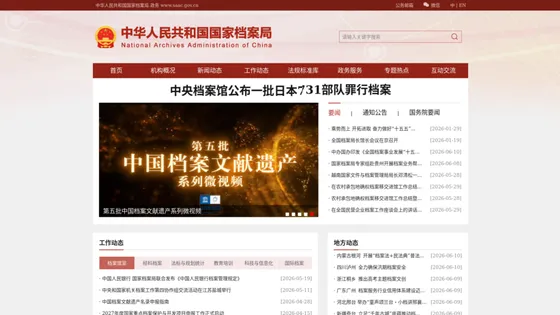
The State Archives Administration of China (SAAC) manages the national archival system of the People's Republic of China, including the Central Archives in Beijing which holds the records of the Chinese Communist Party and the central government since 1949, as well as extensive collections of imperial manuscripts and Republican-era documents. The archive houses materials from the Ming and Qing dynasties, the records of the Republic of China period (1912–1949), and the foundational documents of the PRC including original CCP Politburo records and state council documents. Because YouTube is blocked in China, the government's official searchable historical video content is hosted on the state-run CCTV archive portal, which provides access to decades of Chinese state broadcast history. For researchers of Chinese political history, the development of Chinese communism, and East Asian diplomatic relations, SAAC represents the primary institutional gateway.
The National Center for Archives and Records (NCAR) of Saudi Arabia is the principal state institution responsible for preserving the official records, royal decrees, government correspondence, and national historical documentation of the Kingdom of Saudi Arabia. Its collections include administrative records of the Saudi government since the founding of the modern Kingdom in 1932, official state correspondence, land and property records, and a growing digitization program aimed at preserving older documents relating to the Arabian Peninsula's history under Ottoman suzerainty and during the early years of Saudi rule. For researchers of Gulf politics, Islamic governance, the history of oil development and OPEC, and Arabian Peninsula geopolitics from the 20th century onward, the NCAR serves as the primary official documentary source for Saudi state history.
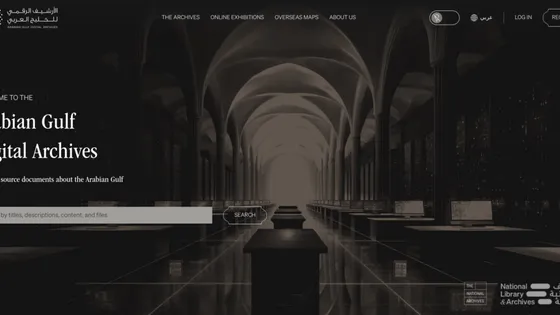
The Arabian Gulf Digital Archive (AGDA) is a unique multinational initiative dedicated to digitizing, preserving, and making publicly accessible historical records spanning the entire Arabian Gulf region — including the UAE, Kuwait, Bahrain, Qatar, Oman, and the wider Gulf area. The archive holds an extensive collection of documents, photographs, maps, treaties, and audiovisual materials documenting the historical transition of Gulf societies from pre-oil tribal and maritime economies to modern nation-states. Particular strengths include materials from the British administration's former involvement in the region under the Trucial States system, as well as records documenting the extraordinary rapid social and urban transformation of Gulf cities during the 20th century. For researchers studying Gulf history, British colonial administration in the Middle East, and the political economy of oil-producing states, this is an increasingly valuable digital resource.

The National Library and Archives of Iran (NLAI) is the central national institution for preserving Iran's extraordinary documentary, literary, and archival heritage — one of the richest and most ancient in the world. Its collections span over 2,500 years of Persian civilization, holding irreplaceable original manuscripts in classical Persian, Arabic, and other languages including illuminated Quran manuscripts, medieval medical and scientific texts, Safavid royal correspondence, and the administrative records of the Qajar and Pahlavi dynasties. The NLAI is the custodian of thousands of rare manuscripts that represent the pinnacle of Islamic Golden Age scholarship in fields including mathematics, astronomy, philosophy, poetry, and medicine. For researchers of Iranian history, Islamic civilization, Persian literature, and the historical continuity of one of humanity's oldest living cultural traditions, this library holds primary materials of world-historical significance.

The Qatar Digital Library — a partnership of Qatar National Library, Qatar Foundation and the British Library — is explicitly free to use and reuse, and holds the world's largest online collection of historical sources on the Gulf and the Arabian Peninsula: more than two million digitized pages. Its core is the India Office Records, the British colonial administration files covering the region from 1600 to 1950, alongside Arabic scientific manuscripts, maps, photographs and sound recordings. Everything is presented bilingually in English and Arabic with expert explanatory articles. For the modern history of the Middle East — trade, oil, empires and independence — it is a primary-source archive of the first order.

The National Archives of Korea preserves the official records of the Republic of Korea — a documentary arc that runs from the late Joseon dynasty and the Japanese colonial period through war, division, reconstruction, rapid industrialisation and democratisation. Its National Archives Portal Service (NAPS) provides online access to digitized records, thematic collections and presidential archives, with a maintained English gateway to the collections. Among its holdings are the records of the Saemaul Undong rural development movement, inscribed in UNESCO's Memory of the World register. For anyone studying how a nation documents profound transformation within a single century, Korea's record is among the most complete anywhere.

Academia Sinica, Taiwan's national academy, has been digitizing the archives and collections of its institutes since 1980; its Scripta Sinica full-text corpus, online since 1995, grew into the world's largest digital database of Traditional Chinese texts. Today the portal Academia Sinica Digital Resources bundles some 150 collection sites with well over a million digitized items: Ming- and Qing-dynasty administrative archives, ancient maps and land contracts, bronze and stone rubbings, bamboo scripts and rare books, Taiwan's natural-history specimens, indigenous-culture collections and recordings of the Formosan languages. Together with the cross-institution union catalogue Digital Archives Taiwan it documents both the island's layered history and the wider Chinese written tradition — accessible online without needing to set foot in a reading room.
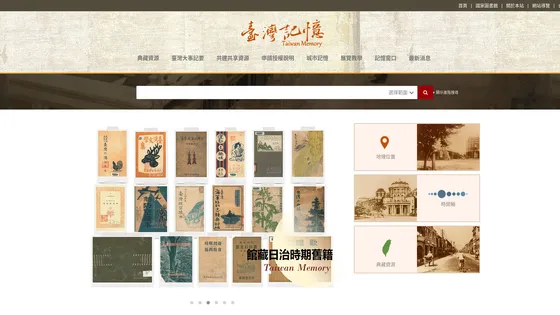
Taiwan Memory is the digital heritage platform of Taiwan's National Central Library. It offers free access to digitized historical photographs, postcards, maps, rare books, official gazettes and newspapers, arranged so that they can be browsed by theme, by timeline or on the map. The collections reach from the Qing era through fifty years of Japanese colonial rule to the modern republic, and include a curated chronology of Taiwanese history alongside city-memory collections that show how Taipei, Tainan and other places changed street by street. The interface is available in English, and the scans are served in generous resolution.
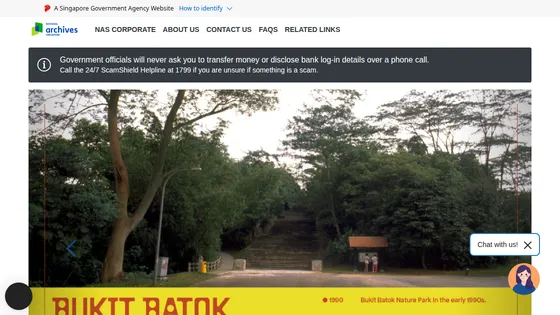
Archives Online is the search portal of the National Archives of Singapore, opening government files, photographs, maps, building plans and audiovisual recordings that document the island's path from colonial Straits Settlement through Japanese occupation to independent city-state. Its most distinctive treasure is the collection of the Oral History Centre: thousands of systematically recorded life interviews — many listenable online — that preserve the memories of Singapore's multicultural society in its own voices and languages. The portal is freely searchable and stands as one of Asia's most accessible national archive services, from a state that records its short, dense history with unusual care.

The Israel State Archives holds the records of the State of Israel since 1948 together with earlier material from the British Mandate administration — cabinet protocols, government correspondence, treaties and photographs. It works as a digital-first archive: rather than a public reading room, it serves its holdings as scans through its online catalogue, with millions of files already digitized and more scanned on request. The interface is primarily Hebrew, with substantial English aids. Its natural companion is the National Library of Israel, whose digital collections add over two million items, including 4.5 million historical newspaper pages in sixteen languages and digitized Hebrew manuscripts from all over the world.

The Directorate of State Archives of the Presidency of Türkiye guards one of the largest archival bodies in the world: the Ottoman archives, whose documents record six centuries of administration across three continents — the Balkans, the Middle East and North Africa — together with the archives of the modern Republic. For the history of dozens of present-day states, from Hungary to Yemen, these files are a primary source without substitute. Millions of documents have been digitized and can be searched in the online Document System (Belge Tarama Sistemi); viewing the scans requires a free personal registration with a Turkish ID or passport number. The main site is available in English.

The National Library of Pakistan in Islamabad is the country's legal-deposit library and bibliographic centre: every book published in Pakistan is meant to arrive here and be recorded in the national bibliography. Its online services open the collection to the world — a searchable catalogue and a growing digital library, alongside manuscript lists that document the older written tradition of the region. For the printed record of Pakistan since 1947, in Urdu, English and the regional languages of a country of more than 240 million people, this is the official first stop.
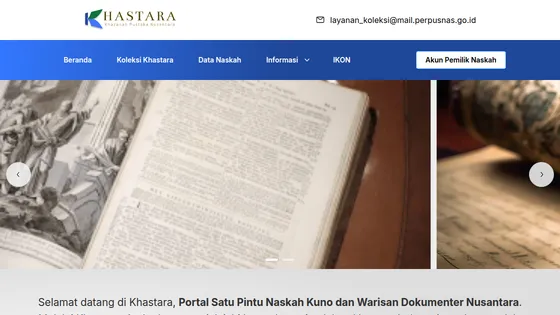
Khastara — Khazanah Pustaka Nusantara, the "treasury of the archipelago's literature" — is the one-stop portal of the National Library of Indonesia for ancient manuscripts and documentary heritage. It serves digitized palm-leaf manuscripts, Javanese and Malay codices, royal letters, early printed books, maps and photographs from the world's largest island nation — the written record of civilisations that wrote, traded and argued across the Indian Ocean long before colonial borders were drawn. Access is free, and for the manuscript heritage of Southeast Asia the portal is a primary address.

Arabic Collections Online is a publicly available digital library of public-domain Arabic-language books, built by New York University together with NYU Abu Dhabi and partner research libraries. Nearly eighteen thousand volumes across more than ten thousand subjects are already free to read online — literature, history, law, philosophy and science — on the way to a goal of 23,000 volumes. For one of the world's great literary languages, read by hundreds of millions, ACO provides what was long missing: a large, open, searchable library of the Arabic printed heritage, page by page.

Dar Al-Kutub — the Egyptian National Library and Archives — is one of the oldest and most significant cultural institutions in the Arab world, holding one of the world's largest collections of Islamic manuscripts and Arabic-language printed works. Founded in 1870 under Khedive Ismail, it preserves over 57,000 rare manuscripts including illuminated Qurans dating to the 9th century, medieval treatises on medicine, astronomy, philosophy, and Islamic jurisprudence, and the administrative records of Egypt's Ottoman, Mamluk, and modern governance periods. Dar Al-Kutub plays a central role in the preservation of Arabic literary heritage and Islamic scholarly tradition. Its digitization efforts have made a portion of the manuscript collection accessible online, providing researchers worldwide with access to primary texts of the Islamic Golden Age that were previously available only to those who could travel to Cairo.

The National Archives and Records Service of South Africa (NARSSA) is the official guardian of the historical documentary heritage of the South African nation, holding records spanning over three centuries from the earliest days of Dutch East India Company (VOC) administration at the Cape to the records of the post-apartheid democratic government. Its collections include the administrative records of the apartheid government — including security police files, population registration documents, and records of the forced removal programs — alongside the liberation movement records that document the ANC's resistance struggle, the negotiations that led to the 1994 democratic elections, and the work of the Truth and Reconciliation Commission. For researchers of colonial history, apartheid, African liberation movements, and the negotiated transition to democracy, NARSSA holds primary materials of exceptional historical importance.

The Archives Nationales du Sénégal is the principal state archive of Senegal and one of the most significant repositories of West African history, holding records from the pre-colonial, colonial, and post-independence periods that document the extraordinary complexity of West African societies over several centuries. The collection includes the administrative records of French colonial Afrique Occidentale Française (AOF), which governed a vast territory encompassing present-day Senegal, Mali, Guinea, Burkina Faso, Côte d'Ivoire, Benin, Niger, and Mauritania. These records, combined with pre-colonial documents relating to the Wolof, Mandinka, and Fula peoples, provide researchers with primary sources for studying West African political structures, trans-Saharan trade, Islamic reform movements, and the long-term consequences of French colonialism. The partner African Online Digital Library hosts and streams historical video content from the West Africa collection.
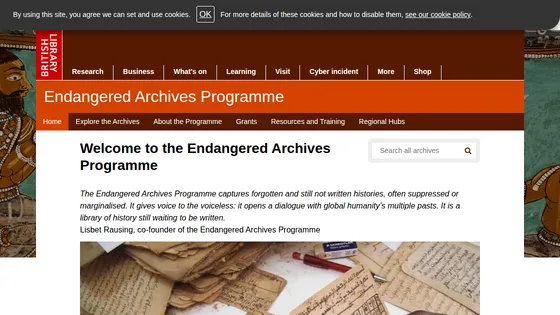
The Endangered Archives Programme of the British Library rescues archives that are in danger of disappearing — through decay, conflict, neglect or political pressure — by funding local teams to digitize them where they are. The result is a free online collection of millions of images from hundreds of projects across some ninety countries, with an especially strong African record: manuscripts from Timbuktu and Djenné, church archives from Ethiopia, photographic studios of West Africa, court records and chronicles that exist nowhere else. In the programme's own words, it captures histories that are often suppressed or marginalised and gives voice to the voiceless — a library of history still waiting to be written.
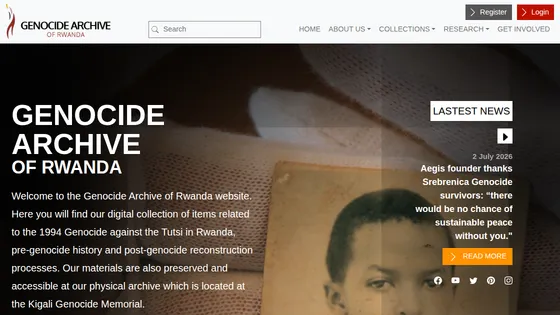
The Genocide Archive of Rwanda is the digital collection of the Kigali Genocide Memorial, documenting the 1994 Genocide against the Tutsi, the history that led to it, and the reconstruction that followed. It preserves survivor and perpetrator testimonies on video, photographs of victims, audiovisual records, documents and information about memorial sites across the country. The archive was built by Rwandans, with the Aegis Trust, so that the evidence remains in Rwanda and speaks from there to the world. It exists to make denial impossible and remembrance concrete — one of the most important human-rights archives on the African continent, freely accessible online.

The African Archives — run on the Umojambele platform, from the Swahili word for unity — is a pan-African portal that gathers digital archives about Africa from many cultural heritage institutions into one place. Its curated themes reach from the great kingdoms and royal archives through treaties, economy and technology to culture, migration and the diaspora, told with historical photographs and documents from across the continent. The aim is African history presented from African ground: not a colonial reading room, but a shared memory built by the people whose history it is. The collections are freely browsable online.

The Bibliotheca Alexandrina in Egypt carries one of the oldest ideas of civilisation — the ancient Library of Alexandria, which tried to collect the knowledge of the whole world — into the digital age. Opened in 2002 on the Mediterranean shore where its predecessor stood two thousand years ago, it is today the most important library of the Arab world. Its Digital Assets Repository (DAR) offers free online access to hundreds of thousands of digitized books — the largest digital collection of Arabic texts anywhere — together with images, maps, audio and video collections and digital exhibitions on Egyptian and Mediterranean history.
The Archivo General de la Nación of Mexico is one of the oldest and largest national archives in the Americas, holding over 80 linear kilometers of historical records spanning more than five centuries of Mexican history. Its collections include pre-Columbian codices and pictographic manuscripts, the complete administrative records of the Spanish colonial Viceroyalty of New Spain (1535–1821), the documents of the Mexican independence movement, imperial records from the Maximilian period, and the administrative archives of the revolutionary and modern Mexican state. The Galería 4 collection, dedicated to documents relating to political repression during the "Dirty War" period of the 1960s–80s, is particularly significant for researchers of Latin American human rights history. The archive has an active digitization program and is a UNESCO Memory of the World register institution.
The Mediateca of Mexico's Instituto Nacional de Antropología e Historia is the open repository of the institution that guards Mesoamerica's heritage: hundreds of thousands of digitized photographs, historical documents, maps, sound recordings and museum objects from archaeological sites and collections across the country — from pre-Hispanic codices and the great cities of the Maya and Teotihuacan to the ethnographic record of Mexico's living indigenous cultures. Access is free and much of the material carries open licences. For the deep history of the Americas, before and after the conquest, this is one of the richest open sources anywhere.

The Arquivo Nacional of Brazil is the central federal archive of the Brazilian state, holding records from the colonial period of Portuguese Brazil through the Imperial era and the successive republican governments up to the present day. Its collections span over 400 years of South American history and include immigration records documenting the largest mass migration in history — the millions of Italians, Germans, Japanese, Eastern Europeans, and others who arrived in Brazil between 1880 and 1950. The archive also holds the personal papers of major Brazilian historical figures, the records of the slavery era including manumission certificates and slave trade documentation, and significant materials relating to the military dictatorship period (1964–1985) including the records of its political police (DOPS). Through its digital portal, many collections are now freely accessible to international researchers.
The Archivo General de la Nación Argentina is the official state archive of Argentina, holding the foundational documents of the Argentine Republic alongside one of the most important photographic and audiovisual collections in South America. Its written records cover the full span of Argentine history from the colonial period through independence, the oligarchic republic, Peronism, the military dictatorships of the 20th century, and the restoration of democracy. The photographic collection holds over 700,000 images documenting Argentine society from the mid-19th century to the late 20th century — one of the largest and most historically comprehensive photo archives in Latin America. For researchers of Argentine political history, the mechanics of South American military dictatorships, immigration history, or the Peronist movement and its lasting influence on Latin American politics, this archive is the primary institutional source.

Library and Archives Canada combines the national library and the national archives in one institution — in its own words, the continuing memory of the federal government and the guardian of Canada's distant past and recent history. Its free online collections are vast: census records from the 19th century onward, the fully digitized service files of the First World War soldiers, immigration and passenger lists that trace millions of arrivals, treaties with the First Nations, maps, war art and photographs. Projects like Project Naming, in which Inuit communities identify the people in historical photographs, show an archive actively returning names to its images. Searchable in English and French.
Canadiana, maintained by the Canadian Research Knowledge Network, is the digitized documentary heritage of Canada: some sixty million pages of books, periodicals, newspapers, government publications and archival collections from the 16th century to the mid-20th — completely free since 2019, when the last paywall was removed. Here are the fur-trade journals and missionary relations, settler newspapers, parliamentary debates in English and French, and the everyday print of a country assembling itself across a continent. Alongside Library and Archives Canada it makes Canada's past one of the most openly readable in the world.
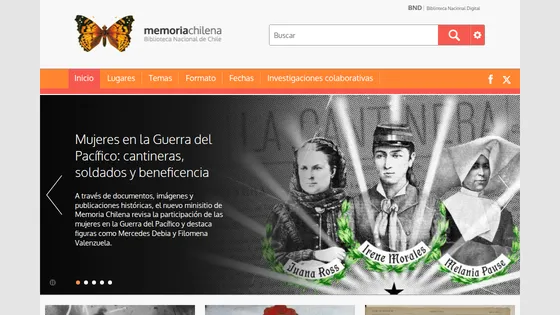
Memoria Chilena, the digital heritage platform of the National Library of Chile, is one of Latin America's pioneering digital archives. Instead of a bare catalogue it publishes hundreds of curated thematic dossiers — on places, movements, writers, wars and everyday life — each combining a researched essay with the digitized primary sources themselves: books, manuscripts, newspapers, photographs, maps and audio, tens of thousands of digital objects in all. Everything can be read and downloaded free of charge, and the platform connects onward to the Biblioteca Nacional Digital. For the history of Chile and the Pacific coast of South America it is the natural first stop.
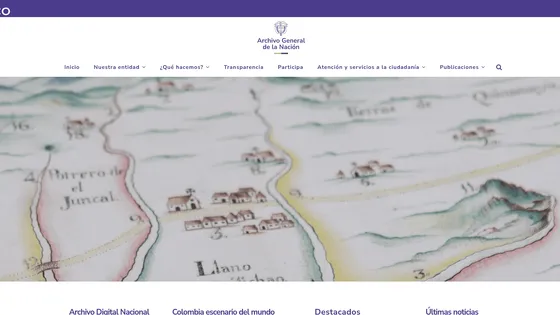
The Archivo General de la Nación of Colombia holds documents reaching back to the 1490s — the written record of the Spanish conquest, the colonial administration of the New Kingdom of Granada, independence and the republics that followed. Its reading room opens onto a growing digital offering: online catalogues and the national digital archive programme make digitized colonial records freely searchable, among them the Negros y Esclavos collection, which documents slavery and the long path to its abolition across four centuries. For genealogy and for the colonial history of northern South America — Colombia, Venezuela, Ecuador and Panama once shared these institutions — it is a key primary source.

The National Archives of Australia invites the public to explore Australia's most valuable government records, and its RecordSearch catalogue delivers millions of digitized files directly to the screen: war service records, the immigration files of the great post-war migration, cabinet papers, ASIO surveillance dossiers and the documents of Federation itself. Its natural companion is Trove, the free discovery service of the National Library of Australia, whose digitized newspapers reach back to 1803 and have been corrected and enriched by one of the world's most active volunteer communities. Together they make Australia one of the most openly documented countries anywhere.

Archives New Zealand — Te Rua Mahara o te Kāwanatanga, "the memory of government" — keeps the official record of Aotearoa New Zealand, including its founding document, Te Tiriti o Waitangi, the 1840 treaty between the British Crown and Māori chiefs. Its online collections search serves digitized government records, war files, maps and photographs free of charge, presented bilingually in English and te reo Māori. The companion service Papers Past, run by the National Library, adds millions of digitized pages of newspapers, magazines, letters and parliamentary papers covering New Zealand and the wider Pacific — full-text searchable from the 1830s onward.
The UN Archives at Geneva guard a singular inheritance: the complete archive of the League of Nations, the world's first attempt at an organisation of all nations. Through the LONTAD project, this entire body — some fifteen million pages covering 1919 to 1946, inscribed in UNESCO's Memory of the World register — has been fully digitized and placed online. Here are the minutes and treaties of the interwar order, the mandates system, disarmament conferences, the Nansen passports for the stateless — the paper record of humanity's first shared institutions, followed by the records of the United Nations in Geneva. It can be searched and read free of charge from anywhere.
UNESDOC, the digital library of UNESCO, provides free access to hundreds of thousands of documents and publications produced since 1945 by the United Nations organisation for education, science and culture — studies, reports, conference records, standard-setting texts and the flagship series on education and world heritage, in the organisation's many working languages. It is the paper trail of the idea written into UNESCO's constitution: that since wars begin in the minds of men, it is in the minds of men that the defences of peace must be constructed. For anyone tracing how the world has debated education, science, culture and communication, this is the primary record.
The United Nations Digital Library opens well over a million resources of the world organisation to everyone: resolutions and meeting records of the General Assembly and the Security Council, voting data for every recorded vote since 1946, speeches, maps and public-domain publications. It answers questions that once required a specialised law library — how each country voted, what was said in the chamber, how a resolution evolved — with a single free search. Together with the League of Nations archive in Geneva, it forms the documentary spine of international cooperation from 1919 to the present day.

The Historical Archives of the European Union in Florence, managed by the European University Institute, preserve the institutional records of the EU bodies and the private papers of the men and women who built European integration — from the first High Authority of the Coal and Steel Community to the present Union. Its online database opens digitized documents, photographs and a growing multimedia portal with oral-history interviews of pioneers and witnesses. For the history of the European project — reconciliation after war, common institutions, enlargement and crisis — this is the central primary source, freely searchable.

The audiovisual archives of the International Committee of the Red Cross document more than 160 years of humanitarian work — from the battlefield of Solferino that gave birth to the movement, through two world wars, to the conflicts of the present. Tens of thousands of photographs, films and sound recordings are freely searchable online: delegates visiting prisoners of war, tracing services reuniting families, hospitals under fire, the quiet mechanics of the Geneva Conventions at work. It is war seen not through the eyes of armies but through the eyes of those who tend its victims — an indispensable visual record of humanity in conflict.
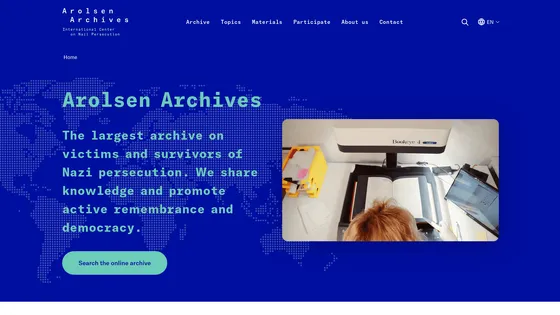
The Arolsen Archives in Bad Arolsen, Germany — formerly the International Tracing Service — are the world's most comprehensive archive on the victims and survivors of Nazi persecution, holding tens of millions of documents with information on around 17.5 million people, inscribed in UNESCO's Memory of the World register. Concentration-camp records, deportation lists, forced-labour files and displaced-persons records were gathered after 1945 to trace the missing; today the online archive makes ever more of them freely searchable, and the crowdsourcing project Every Name Counts invites everyone to help index them. The archive still answers thousands of family enquiries every year.
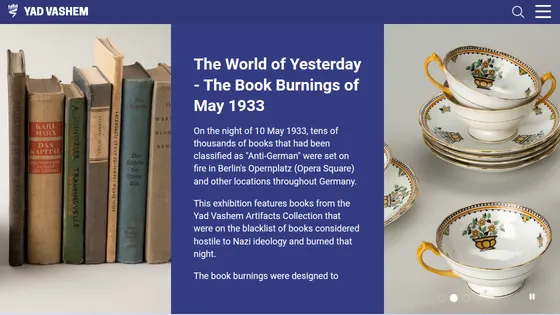
Yad Vashem in Jerusalem, the World Holocaust Remembrance Center, carries a mandate written in its name — a "place and a name" for every victim. Its Central Database of Shoah Victims' Names has recovered millions of individual names from testimony pages, lists and records, each one searchable online, alongside vast digitized collections of photographs, documents, survivor testimonies and the files of the Righteous Among the Nations who saved Jewish lives. The databases are free and open to the world. Where the genocide sought to erase people without trace, this archive restores them, name by name.

The United States Holocaust Memorial Museum in Washington is one of the world's central institutions for Holocaust documentation, research and education. Its online collections search opens digitized documents, photographs, films, artifacts and one of the largest bodies of recorded survivor testimony anywhere; the freely readable Holocaust Encyclopedia, maintained in many languages, is often the first serious source a learner meets. The museum also holds a digital copy of the Arolsen records, extending access across the Atlantic. Its stated mission — to confront hatred, prevent genocide and promote human dignity — makes it as much a warning system as a memorial.

The Nuremberg Trials Project of the Harvard Law School Library provides free access to the documents of the trials of the military and political leaders of Nazi Germany: trial transcripts, prosecution and defence briefs, document books, evidence files and photographs, digitized and searchable. In these pages international law learned to answer industrial-scale crime — the trials defined crimes against humanity and established that following orders excuses no one. Reading the actual transcripts, rather than summaries of them, shows how that answer was built: question by question, document by document.
The International Residual Mechanism for Criminal Tribunals continues the work of the United Nations tribunals for the former Yugoslavia and for Rwanda. Its Unified Court Records database gives free access to the digitized case files of both tribunals: indictments, hearing transcripts, judgements and evidence from the trials that answered the Srebrenica genocide and the 1994 genocide against the Tutsi. Together with courtroom broadcasts and case archives, it makes the first international criminal trials since Nuremberg publicly readable — the precedents on which today's international justice stands.
The official website of South Africa's Truth and Reconciliation Commission preserves the record of one of history's great experiments in facing a nation's past: the hearings held after the end of apartheid, in which victims and perpetrators testified publicly, sometimes in the same room. The transcripts of the amnesty and human-rights-violations hearings, the commission's final report and its media records are freely readable. The TRC's premise — that truth spoken aloud is a condition of reconciliation — made it a model studied around the world; here it can be read in the original, word by word.

The Internet Archive in San Francisco is a non-profit library of millions of free books, films, software titles, music recordings and images — and home of the Wayback Machine, which lets anyone revisit more than a trillion saved web pages across three decades of the internet. Founded in 1996 on the principle of universal access to all knowledge, it preserves what would otherwise vanish: out-of-print books, orphaned software, broadcast news, deleted websites. For researchers of the digital age it is indispensable — the only place where the web itself, humanity's newest archive, has a memory.

HathiTrust — named after the Hindi word for elephant, an animal that never forgets — is a partnership of major research libraries that pooled their digitized collections into one of the largest digital libraries in the world: well over fifteen million volumes from the shelves of great universities. Millions of public-domain books, journals and government documents are fully readable and downloadable online without any login, and the entire corpus is full-text searchable — a way to locate a phrase across centuries of print in seconds. For scholarly literature and historical books in many languages, it is among the deepest free resources anywhere.
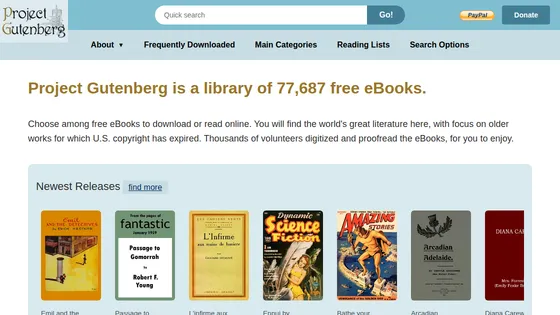
Project Gutenberg is the ancestor of all digital libraries: founded in 1971, when Michael Hart typed the United States Declaration of Independence into a mainframe, it has grown — entirely through volunteers — into a collection of nearly eighty thousand carefully proofread free eBooks. Here is the world's great literature whose copyright has expired: novels, poetry, philosophy, history and science in dozens of languages, readable online or downloadable in every common format, without registration or fee. Half a century on, it remains quiet proof that universal access to books needs nothing more than people willing to share them.

The Digital Public Library of America gathers more than fifty million digitized items from thousands of American libraries, archives and museums into a single free search: photographs, manuscripts, maps, newspapers, oral histories and artifacts from institutions large and small, from the Library of Congress to county historical societies. Its curated primary-source sets and exhibitions turn scattered local collections into usable history for students and researchers. As a portal it demonstrates what a nation's cultural memory looks like when it is stitched together and simply given away.
Smithsonian Open Access is the door the world's largest museum, education and research complex opened in 2020: millions of images, 3D models and data records from the Smithsonian's collections released into the public domain under Creative Commons Zero — free to download, share and reuse, in the museum's own words, "right now, without asking". Air- and spacecraft, portraits, natural-history specimens, cultural treasures from every continent: what once required a visit to Washington is now raw material for anyone's research, teaching or art. It is one of the boldest acts of institutional openness any museum has made.
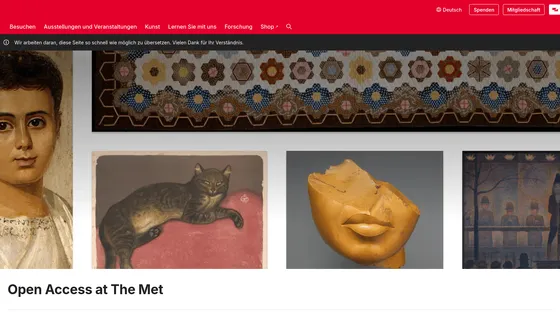
Open Access at The Met places nearly half a million images of artworks from the Metropolitan Museum of Art in New York under Creative Commons Zero: five thousand years of art from every continent — Egyptian sculpture, Islamic calligraphy, Japanese prints, European painting, the arts of Africa, Oceania and the Americas — free to download and use for any purpose, without asking. Together with Smithsonian Open Access and Rijksstudio it belongs to the great trio of museums that simply gave their collections to the world; side by side they make world art history a public resource.
Rijksstudio is the open collection of the Rijksmuseum in Amsterdam: more than 700,000 artworks — Rembrandt's Night Watch and Vermeer's Milkmaid among them — photographed in extraordinary resolution and released for free download and unrestricted reuse. The museum pioneered this radical openness in 2012, arguing that a public collection should actually belong to the public, and invited everyone to study, print and remix the masterworks. For the Dutch Golden Age and far beyond, it remains the standard other museums are measured against.
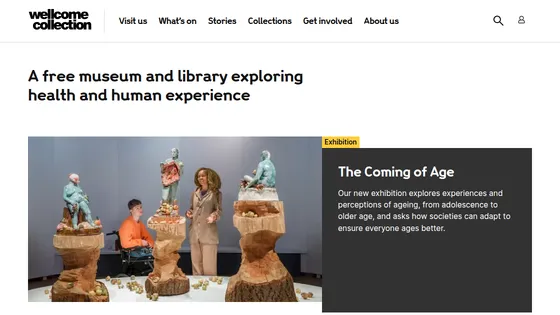
The Wellcome Collection in London — a free museum and library exploring health and human experience — holds one of the world's great collections on the history of medicine, and has put a remarkable share of it online: digitized manuscripts, rare books, paintings, posters, photographs and archives, most of it under open licences that allow free reuse. From medieval medical manuscripts and alchemical treatises to public-health campaigns and the papers of modern genetics, it documents how humanity has understood bodies, sickness and healing across cultures. The digital collections are searchable and downloadable without registration.
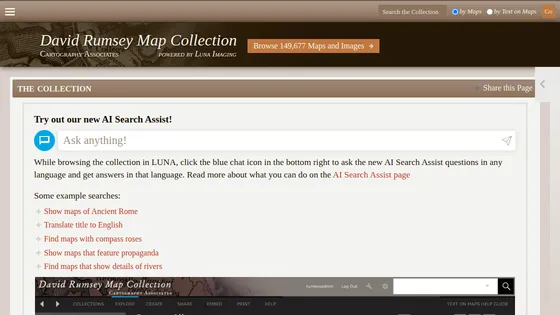
The David Rumsey Map Collection makes one of the largest private map collections in the world public: around 150,000 historical maps and images, free to browse in very high resolution. Atlases, globes, school wall maps, city panoramas and sea charts from five centuries show how humanity has seen — and claimed — the world: borders that wandered, countries that vanished, blank oceans that slowly filled in. Every map can be zoomed to the finest engraved line, and many are georeferenced so they can be laid over the modern globe. For visual history there is nothing quite like it.
Europeana is the European Union's digital platform for cultural heritage, inviting everyone to discover art, books, films and music from thousands of European museums, libraries and archives — tens of millions of digitized items in one multilingual search. A painting in Vienna, a manuscript in Lisbon, a newsreel in Warsaw and a folk song in Athens appear side by side, many under open licences ready for reuse in education and research. Thematic collections on art, fashion, migration, music and both world wars turn the continent's scattered heritage into one shared, browsable memory — the cultural counterpart to the archives above.

NASA's Image and Video Library gathers the visual record of space exploration into one free, searchable place: photographs, videos and audio from the Mercury, Gemini and Apollo programmes through the Space Shuttle and the International Space Station to today's Mars rovers, space telescopes and Artemis missions. As works of the United States government, most items are free to download and reuse. The library holds some of the most consequential images humanity has ever produced — the Earth rising over the lunar horizon among them — available to every classroom in the world.
The CERN Document Server is the open repository of the European Organization for Nuclear Research in Geneva: over half a million records of articles, preprints, technical reports, photographs and films from the laboratory where the World Wide Web was invented — and given to everyone, free. From the accelerator designs of the 1950s to the papers announcing the Higgs boson, the documentary record of modern particle physics is readable here without any subscription. CERN was founded as a peaceful joint venture of many nations; this archive is that founding promise of openness, kept in public.
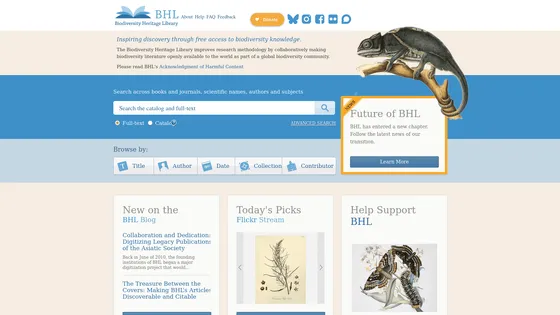
The Biodiversity Heritage Library is a consortium of the world's leading natural history libraries — from the Smithsonian to Kew Gardens — that has digitized the printed record of life on Earth: over sixty million pages of biodiversity literature from the 15th century onward, free to read and download. Here are the original descriptions of species, the great illustrated flora and fauna volumes, expedition reports and the sources Darwin himself worked from, full-text searchable and linked to the scientific names they contain. For understanding what lives — and once lived — on this planet, it is the open library of record.

arXiv, founded in 1991 and maintained by Cornell University, is the open archive of science in motion: nearly 2.4 million scholarly articles in physics, mathematics, computer science and neighbouring fields, posted by the researchers themselves and free to read from the moment they appear. Much of contemporary science — from black-hole astrophysics to machine learning — is published here first, months before any journal prints it. arXiv turned the sharing of research from a subscription privilege into a daily worldwide habit; open access to scientific knowledge began in earnest with this archive.

PubMed Central, run by the US National Library of Medicine at the National Institutes of Health, is the free full-text archive of biomedical and life-sciences literature: millions of complete research articles, openly readable and searchable. When a discovery about a disease, a vaccine or the workings of the human body is published from publicly funded research, this is where it becomes readable for everyone — patients, students, physicians and researchers alike, with no subscription in the way. For the health questions that concern every human being, it is the primary open source.